The science
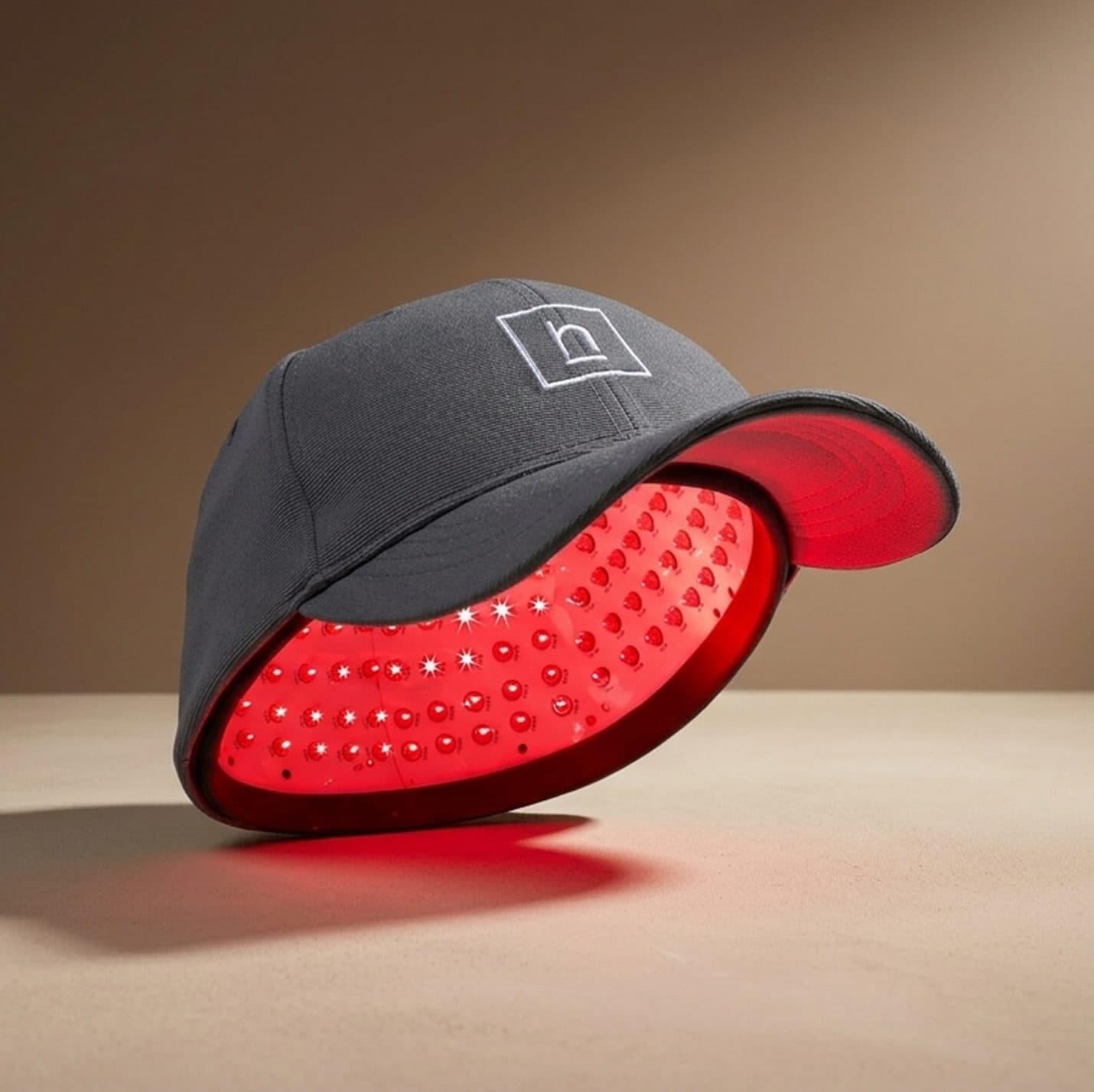
There is a lot of buzz around the potential benefits of red light therapy, and its latest frontier is hair restoration. Red light therapy (RLT) for hair loss is a non-invasive treatment that uses specific wavelengths of light to stimulate hair growth and reduce thinning. It’s delivered through low-level laser therapy (LLLT) or LED devices, such as helmets, combs, or panels. RLT has gained traction for various health concerns, and its use for hair restoration is backed by growing scientific evidence, particularly for male and female pattern hair loss, called androgenetic alopecia. Evidence for other conditions that cause hair loss, like alopecia areata, is more limited.
Red light therapy for hair loss harnesses visible red light and, in some cases, near-infrared light. At the right wavelengths, the lasers penetrate the scalp, where they are absorbed by cells in the hair follicles. The key mechanism involves the stimulation of mitochondria—the energy powerhouses of cells. When light photons are absorbed by a protein called cytochrome c oxidase, it triggers an increase in adenosine triphosphate (ATP), the molecule that fuels cellular activity. This boost in ATP energizes the hair follicles, encouraging them to shift from a resting phase to a growth phase.
We also know RLT enhances blood flow to the scalp, delivering more oxygen and nutrients to the follicles. It may also reduce inflammation, which can contribute to hair loss in conditions like alopecia areata. Several studies support these effects.
While the exact pathways are still being studied, the combination of increased cellular energy, improved circulation, and reduced inflammation appears to create an environment conducive to hair growth.
The potential benefits
Red light therapy for hair loss offers several potential benefits, though results can vary based on the individual and the type of hair loss. Proper medical assessment is crucial to achieve optimal results, because it’s important to know what kind of hair loss you might be experiencing; red light therapy is not a panacea for all hair loss.
Key benefits include:
- Increased hair density: Proper and regular use of RLT produces more hairs per square centimeter, particularly in areas of thinning.
- Reduced hair shedding: Less hair loss during brushing, washing, or daily activities.
- Improved hair thickness: Thicker, stronger strands that are less prone to breakage.
- Faster hair growth: Some users report accelerated growth rates, though this is less consistent.
- Non-invasive and painless: Unlike surgical options for hair restoration, RLT is painless and can be done at home.
Usage guidelines
Proper use of RLT is crucial for effectiveness. Here’s how to approach it:
- Follow the manufacturer’s guidelines: Each device has different treatment times and frequency of use.
- More is not necessarily better: Like other forms of RLT, hair loss treatment follows a biphasic dose response—too little or too much light can reduce benefits. Stick to the manufacturer’s recommendations.
- Eye protection: Avoid direct or indirect eye exposure. All of the recommended devices below use lasers, which can cause serious damage to the eyes.
- Scalp exposure: Ensure the light reaches the scalp. For best results, use on clean, dry hair without styling products.
- Timing: If you are also using a topical solution for hair loss, it is best to put this on after using a red light, as the laser may deactivate some of the components in your solution.
- Consistency: RLT for hair loss is not a quick fix. It requires consistent use over months to see results. Below is a typical timeframe to keep in mind:
- 0–3 months: Some users may notice an initial increase in shedding. This is usually temporary and part of the hair cycle resetting.
- 3–6 months: Early signs of improvement, such as less shedding, stronger hair strands, and some new growth.
- 6–12 months: More visible density and regrowth; hair may look fuller and healthier.
General recommendations
- Laser vs. LED: Lasers are better able to penetrate into the scalp and have stronger clinical data to support their effectiveness. For this reason, LEDs are less preferred. Of note, whole-body LED panels are not specifically designed for hair loss and may be less effective due to lower scalp penetration and diffuse application.
- Device type: Common options include helmets, hats, bands, combs, or clinic-based treatments. Choose a device that covers the areas you are looking to target. Helmets and hats do best for full scalp coverage, although some bands can also be moved around to achieve this result. Laser combs may be best for those with minimal hair loss seeking specific spot treatments.
- FDA clearance: Prioritize FDA-cleared devices, which meet safety and efficacy standards.
Product recommendations
When it comes to the clinical evidence, there are clear winners. “To date, nothing comes close to HairMax and Capillus in terms of the data,” says Dr. Daniel Angerbauer, a preventive medicine expert and physician at the Atria Health Institute.